Song
Five Grand for a Kidney
Rick (Curse Breaker) · 3:15 · from What You Feed
You'd raise five grand in two weeks to save someone you love. So why won't you do it for you?
Warrior's Way Mindset — a mentor's songs for men doing the work.
What “Five Grand for a Kidney” is about
Five Grand for a Kidney opens with a thought experiment Rick runs like a scalpel: the person you love most needs a kidney — five grand in two weeks or they die. Would you get the money? Of course you would. You'd sell everything, work till you're sick, pawn the last ring — you'd never quit. Then the mirror turns: so why is your own name the one you hold back? The one who needs saving is you. Sung as a calm, hazy dream-ballad — the life-or-death hustle delivered like a lullaby — so the self-worth landing arrives as warmth instead of a lecture. If you've ever asked why it's easier to fight for others than for yourself, or quietly wondered whether you're worth that kind of effort, this is the thought experiment that settles it. From a Warriors Way phalanx call. Listen free on Mi.
About “Five Grand for a Kidney”
From a phalanx call, August 2026. Rick's question is simple: if someone you love needed five grand in two weeks to live, would you get it? Yeah. You'd never quit. The song holds that certainty up to the mirror — the same list of sacrifices, sung twice: first as what you'd do for them ('you would sell your shit'), then as a vow to yourself ('I will sell my shit'). The pronoun flip IS the transformation. It ends on the album's most fragile word: maybe.
The journey
- 01
The Bill
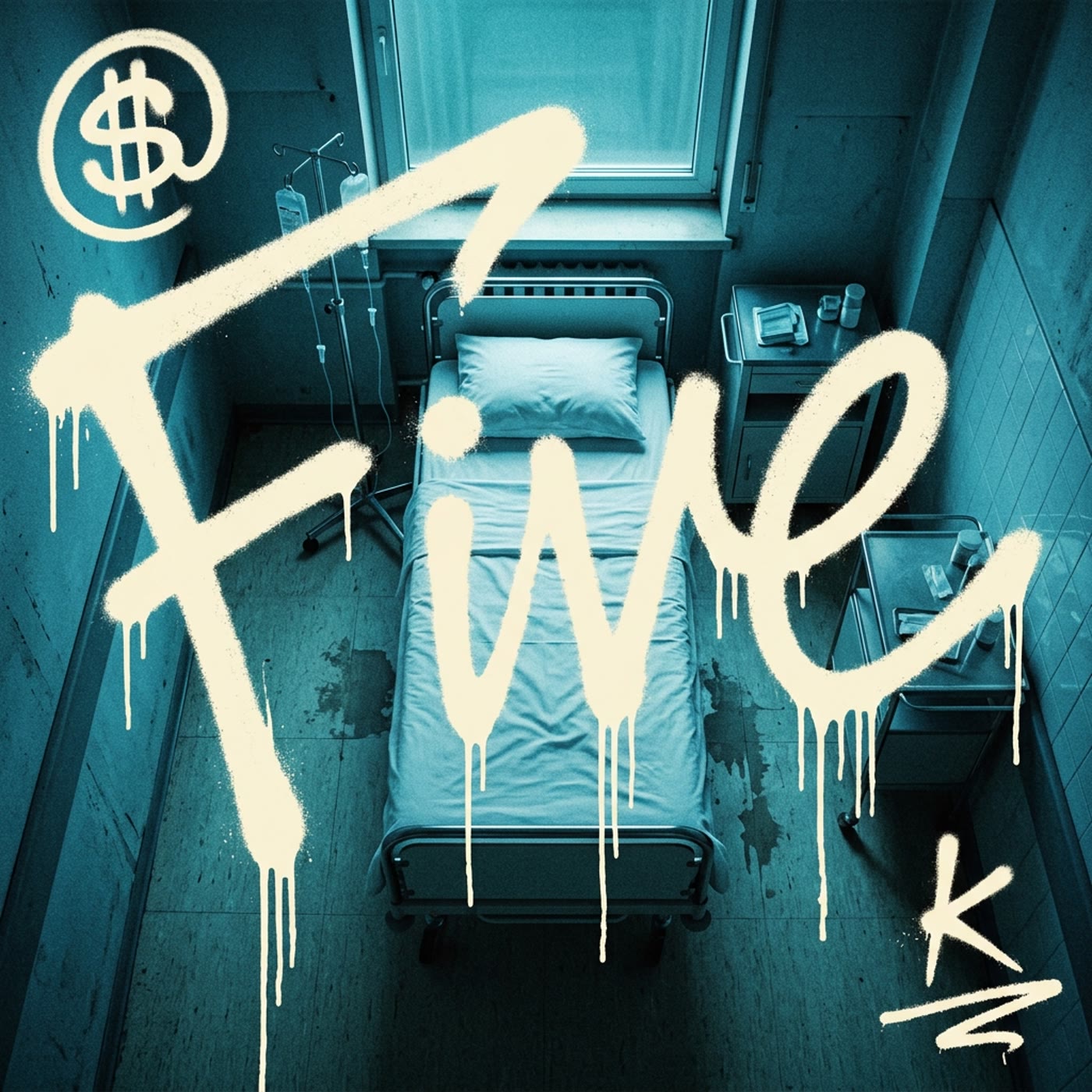
The person you love most, a sterile white sheet, and the universe's invoice: five grand in two weeks.
- 02
The Hustle
Everything you would do — sell it, pawn it, work till you're sick. No hesitation.
- 03
The Certainty
Would you get it? Yeah. You know you'd never quit it.
- 04
The Mirror
So why is your own name the one you hold back? The one who needs saving is you.
- 05
The Vow
The same hustle, flipped to first person: I will. The pronoun is the whole transformation.
- 06
The Worth
Maybe I'm worth working this hard. Maybe I'm worth it all. Maybe…
In Rick's words
“If someone's life was on the line, you'd figure it out. You'd never quit.” — Rick
“The one who needs saving... is you.” — from the song
Lyrics
The person you love most in this world Clock on the wall, a sterile white sheet unfurled They need a kidney, they need it right now And the price on the tag is a goddamn vow Five grand in two weeks, or they fucking die Don't ask the reason, don't ask them why It's just the bill that the universe sends Your whole world shrinks down to making amends And you would sell your shit You would work till you're sick You'd pawn the last ring You'd do anything You would work double hard Swipe the last credit card Take the back-breaking jobs Silence the sobs You'd cut out the habits, the noise, and the doubt You'd figure shit out If someone's life was on the line And you had to get five grand in time Do you think that you would get it? Yeah. You know you'd never quit it. So why is the mirror so easy to crack? Why is your own name the one you hold back? Now you have to feel like you're worth that, too. The one who needs saving... is you. I will sell my shit I will work till I'm sick I'll pawn the last ring I'll do anything I will work double hard Play that last credit card Take the soul-breaking jobs Swallow the sobs I'll cut out the habits, the noise, and the doubt I'll figure shit out 'Cause maybe I should appreciate me, too Maybe the one I've been fighting for is you If it was my name on that sterile white sheet Would I hustle for me like I'd hustle for you? Damn right I would. Maybe I am worth working this hard. Maybe I'm worth fighting for the debt and the pain and the cost and the fall Maybe I'm worth it all. Maybe...
Lyrics © Mi. / the Re. Read the lyric sheet in the app.
Behind the Music
The story behind “Five Grand for a Kidney” — the session, the writing, and what it took to get it out. Watch on Mi.’s YouTube channel.
The full story of this video›
This episode opens on a reframe: your question isn't 'what do I do when I'm tired' — it's 'how do I raise the efficiency of my day toward my purpose.' From there Rick builds toward the thought experiment the song is named for, and he runs it like a scalpel: the person you love most needs a kidney. Five grand in two weeks, or they die. Would you get the money? Every man on the call knows instantly — he'd sell everything, take the back-breaking jobs, work till he was sick. Nobody says 'I don't know if I could.'
And then the mirror turns, in Rick's exact words: now you have to feel like you're worth that, too. The fight was never missing. The drive exists at full strength — it just never had your own name on the list of people it saves. Duplicate that energy, run it as your own standard, and — as Rick lands it — nothing stops you.
The song sets the experiment to a hazy, calm dream-ballad: the same list of sacrifices sung twice, first as what you'd do for them, then as a vow to yourself. The pronoun flip is the whole transformation, and it ends on the album's most fragile word: maybe.
The story behind the song
Five Grand for a Kidney: The Question That Exposes Your Self-Worth
If someone you love needed $5,000 in two weeks to live, you'd get it — no question. The song asks the only question left: why won't you fight like that for you?
Here's a test you can't fail dishonestly. The person you love most needs a kidney. Five grand in two weeks, or they die. Would you get the money?
You already answered. Everyone does. You'd sell everything, pawn the last ring, swipe the last card, take the back-breaking jobs, work till you're sick. Nobody — nobody — says 'I don't know if I could.' Which is exactly why Rick (Codename: Curse Breaker) runs this experiment on his phalanx calls: it proves the fight was never missing.
“If someone's life was on the line and you just had to get five grand — do you think that you would get it? …Now you have to feel like you're worth that, too.”
— Rick, on the call
The pronoun flip
The song's craft move is almost invisible and carries everything: the same list of sacrifices is sung twice. First as what you would do for them — 'you would sell your shit, you would work till you're sick.' Then, after the mirror turns, as a vow — 'I will sell my shit. I will work till I'm sick.' Nothing else changes. The pronoun IS the transformation.
And the ending refuses to overclaim. After the vow, the last word of the song is the most honest one a man rebuilding his self-worth can say: maybe. Maybe I'm worth working this hard. Maybe I'm worth it all. Maybe. Recovery talks like that.
Why it sounds like a lullaby
The production choice is the meaning: life-or-death stakes delivered as a hazy, vintage dream-ballad — a calm croon dragging behind the beat, tidal swells instead of climaxes, one cavernous room of reverb. The voice never dramatizes what the words already make heavy, so the mirror-turn arrives as warmth instead of a lecture. Sweet voice, mortal stakes — the split does the work.
Run it on yourself
The experiment takes thirty seconds. Name the person you'd save. Feel how fast the certainty comes. Then ask the mirror question and notice what happens in the half-second before you answer. That half-second is what the song is about — and what the whole Warriors Way works on, daily.
Proud Sponsor
The Warrior's Way Mindset
This isn't just a men's group — it's a badass MENtor Group.
A mentorship community for men committed to personal development. Mindset coaching, the Battlefield of the Mind podcast, and a Discord brotherhood led by Rick.
Book a call →Sponsored content · Mi. partner
Upcoming Events
📅 Sat, Oct 17 · 10:00 AM CT
Q&A With Rick
Meet Rick, ask questions, find your place in the pack.
↻ Every Saturday · 📍 Virtual — the link drops in the Discord
Events in series
📅 Sat, Oct 17 · 10:00 AM CT
📅 Sat, Oct 24 · 10:00 AM CT
📅 Sat, Oct 31 · 10:00 AM CT
📅 Sat, Nov 7 · 10:00 AM CT
About Rick (Curse Breaker)
Rick: Codename: Curse Breaker breaks generational curses out loud. On the Warriors Way phalanx calls, his thought experiments do the surgery: this one proves every man already knows how to fight for a life — he's just never pointed that fight at his own.
More from Rick (Curse Breaker)
Five Grand joins The Duncan Post and Opened the Present on What You Feed — the album built from the phalanx calls.
The Making Of
The Inspiration
A hazy, vintage-analog dream-ballad in the desert-noir tradition — a calm, behind-the-beat croon carrying life-or-death stakes, tidal swells instead of climaxes, and a cavernous reverb that turns the whole mix into one room.
- Dream-rock ballad
- Desert-noir
- Psych-blues tradition
- Vintage-analog live-band
- Felt half-time, narcotic sway
- Minor-key · 3
- Calm, behind-the-beat croon
- Sweet delivery over bitter stakes
- Airy self-harmony stacks
- Tidal swell-and-recede, no detonation
- Tremolo and fuzz guitars under the dream
- Loose live half-time drums
- Round fingered bass pulse
- Cavernous plate reverb-as-place
- Tape-echo tails, faint organ drone
- Preserved dynamics, anti-brick-walled
- Life-or-death tenderness
- Self-worth reckoning
This track was generated with AI from a documented analysis of a genre's structural elements — tempo, vocal delivery, arrangement, and production aesthetic. Mi. publishes that analysis below. Any resemblance to a specific recording artist's voice or composition is a coincidence of methodology, not imitation.
Sonic Architecture
Vocal Delivery
A languid croon dragging deliberately behind the beat — calm, unbothered, almost sweet — while the words carry life-or-death stakes. That split is the engine: the voice never dramatizes what the lyric already makes heavy. Airy self-harmony doubles widen the swells.
Structure
Tidal, not climactic — sections swell and recede like breathing; the chorus surges without detonating, and the track sustains on texture-drift rather than a chord journey, landing on a receding tail instead of a big finish.
Production Aesthetic
A vintage-analog live-band haze: loose half-time drums in a room, round fingered bass, tremolo-and-fuzz guitars that surge loud in the swells yet stay submerged behind the voice, all inside one cavernous plate reverb that reads as a place — a band at the far end of an empty ballroom. Dynamics preserved, nothing slammed.
Mood Territory
Low-valence tenderness with the stakes kept at body temperature: the fight-for-your-life hustle sung as a lullaby, so the mirror-turn — would you fight this hard for yourself? — lands as warmth, not sermon.
How this song was made
Five Grand for a Kidney came out of Rick's coaching and his own surrender — the Warrior's Way Mindset — with Rick's words shaped into a song and produced by Mi. The words above are Rick (Curse Breaker)'s own; the lyrics are Mi.'s and the Re's. How Mi. works · Listen and read the lyrics in the app.
Mi. — iM HEARD · songs made from real conversations, each one written for the person who lived it.